Drawing of Stakeholder map
Stakeholder Analysis, Project Management templates and advice
Over 2k execs use our Stakeholder Mapping Templates, get:
  • A complete IT software project Stakeholder Analysis
  • Complete Construction Project Stakeholder Map
  • Example Stakeholder Management Plan
  • Stakeholder Engagement Plan
  • Stakeholder Analysis & Stakeholder Salience Templates
  • Communication & Reporting Plan
  • Sample text to copy and paste for your assignment or project
  • BUY NOW!

Examples of Stakeholders in Healthcare

by | reviewed 09/08/2026
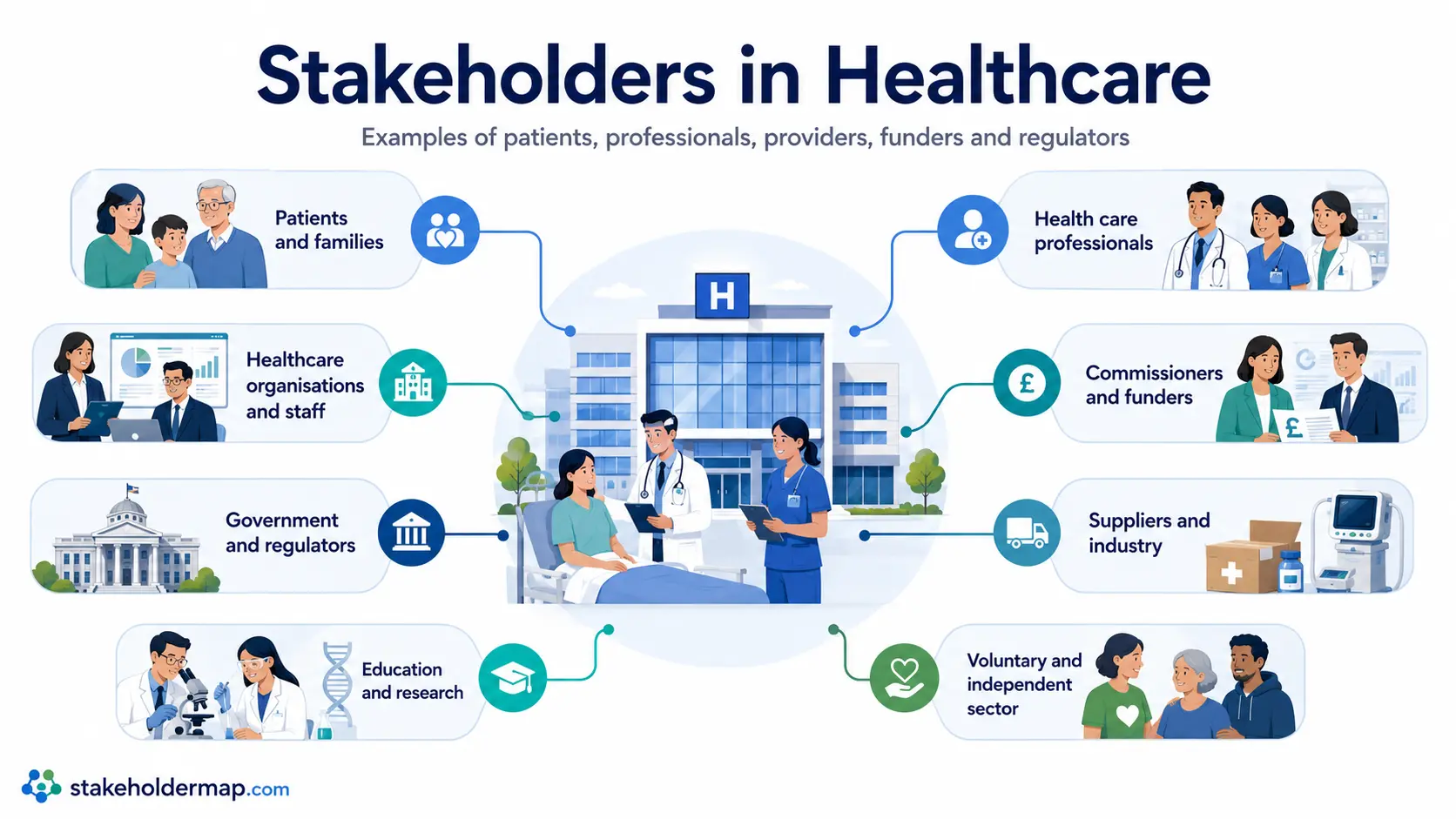
Stakeholders in healthcare infographic showing patients and families, healthcare professionals, healthcare organisations, commissioners and funders, government and regulators, suppliers, researchers, and voluntary organisations connected to a central hospital.
Healthcare stakeholders can include patients, families, health professionals, providers, commissioners, funders, regulators, suppliers, researchers and voluntary organisations. Select the image to view a larger version.

Healthcare stakeholders are the people, groups and organisations that provide, use, fund, regulate or are affected by healthcare services.

Use this page as a checklist when identifying stakeholders for a healthcare organisation, service or project. For a checklist that is not specific to healthcare, see our general stakeholder list .

List of Stakeholders in Healthcare

This healthcare stakeholder list covers patients, professionals, providers, funders, regulators, suppliers and other groups involved in healthcare.

Select a group to expand or collapse it.


Patients, families and communities
Patients and service users People receiving healthcare services. Their needs, experiences, safety and health outcomes should be central to healthcare decisions.
Families and carers Relatives and carers who support patients and may help with treatment, care decisions, recovery and day-to-day support.
Patient representative groups Groups that represent the views and experiences of patients when healthcare services, policies or changes are being considered.
Patient advocacy organisations Organisations that support patients, raise concerns and campaign for better access, treatment, safety or standards of care.
Local communities People who live in the areas served by healthcare organisations and who may be affected by changes to local services.
Healthwatch and public voice organisations Organisations that gather public views and help make sure patients and communities have a voice in healthcare services.
Health care professionals
Doctors and GPs Medical professionals who diagnose illness, provide treatment and make clinical decisions in hospitals, primary care and other settings.
Nurses and midwives Professionals who provide direct care, monitor patients, support treatment and help patients throughout their care.
Pharmacists Professionals responsible for medicines, including their safe supply, use, review and management.
Dentists and dental teams Professionals who provide oral healthcare, including prevention, diagnosis and treatment.
Paramedics and ambulance services Emergency healthcare professionals who assess, treat and transport patients who need urgent care.
Allied health professionals Professionals such as physiotherapists, occupational therapists, radiographers, dietitians and speech and language therapists.
Mental health professionals Psychiatrists, psychologists, mental health nurses, therapists and others who provide mental health assessment, treatment and support.
Social workers Professionals who help people with social care, safeguarding, housing, family support and other needs linked to their health.
Care workers and nursing assistants Staff who provide personal care and practical support in hospitals, care homes, community services and people's homes.
Hospital discharge teams Staff who plan how patients will safely leave hospital and arrange any care or support they need afterwards.
Clinical support staff Staff such as healthcare assistants, technicians and other support roles who help clinical services operate effectively.
Healthcare organisations and staff
Hospitals and hospital trusts Organisations that provide hospital services and are responsible for their quality, safety, finances and performance.
Primary care organisations and GP practices Organisations that provide first-contact healthcare and manage much of the routine care patients receive.
Community healthcare providers Services that provide healthcare outside hospitals, often in clinics, community settings or patients' homes.
Mental health providers Organisations that provide mental health assessment, treatment, crisis support and longer-term care.
Senior management and boards Leaders responsible for strategy, governance, performance, finance, risk and the overall running of healthcare organisations.
Health care administrators Staff who support appointments, referrals, records, patient administration and the day-to-day running of services.
Finance teams Staff responsible for budgets, financial planning, payments, costs and financial controls.
Human resources teams Staff responsible for recruitment, employment, workforce policies, training and staff support.
IT and digital teams Teams responsible for clinical systems, digital services, devices, infrastructure and technical support.
Information governance and data protection teams Staff responsible for the safe, lawful and appropriate use of patient and organisational information.
Estates and facilities staff Staff who manage buildings, maintenance, cleaning, security, utilities and the physical healthcare environment.
Commissioners and funders
Integrated Care Boards and other healthcare commissioners Organisations that assess healthcare needs, plan services and decide how healthcare funding should be used.
Government funding bodies National or regional bodies that provide healthcare funding and may set priorities or conditions for how it is spent.
Local authorities Local government organisations with responsibilities for public health, social care and services that affect health and wellbeing.
Insurance companies Organisations that fund or reimburse healthcare for people covered by health insurance policies.
Private healthcare funders Employers, individuals or other organisations that pay directly for private healthcare services.
Taxpayers and the public People who fund publicly financed healthcare and have an interest in how public money is used.
Government and regulators
Government health departments Government departments that develop healthcare policy, legislation and national priorities.
Public health bodies Organisations focused on protecting and improving the health of populations and preventing illness.
Healthcare regulators Organisations that inspect, monitor or regulate healthcare services and check that required standards are met.
Professional regulators Bodies that set professional standards and regulate healthcare professionals such as doctors, nurses and pharmacists.
Medicines and medical device regulators Bodies responsible for the safety, approval and regulation of medicines, devices and other healthcare products.
Local government Councils and other local public bodies whose services and decisions can affect healthcare and population health.
Ombudsmen and complaints bodies Independent organisations that investigate complaints and concerns about healthcare organisations or public services.
Suppliers and industry
Pharmaceutical companies Companies that research, develop, manufacture and supply medicines used by healthcare services.
Medical device companies Companies that develop and supply medical devices, equipment, implants and diagnostic technology.
Technology and software suppliers Suppliers of electronic health records, clinical systems, apps, infrastructure and other digital healthcare services.
Equipment and consumables suppliers Organisations that provide equipment, protective products, medical supplies and other items needed to deliver healthcare.
Outsourced service providers External organisations that provide services such as catering, cleaning, transport, administration or technical support.
Construction and facilities suppliers Contractors and suppliers involved in building, maintaining or upgrading healthcare facilities.
Laboratories and diagnostic providers Organisations that carry out tests, imaging and other diagnostic services used to support patient care.
Education, research and professional bodies
Universities and academics Institutions and individuals involved in healthcare education, research, evidence and professional development.
Medical and healthcare researchers Researchers who study diseases, treatments, healthcare services, patient outcomes and ways to improve care.
Clinical trial organisations Organisations involved in designing, managing and delivering research studies involving patients and healthcare treatments.
Medical schools and training providers Organisations responsible for educating and training current and future healthcare professionals.
Royal colleges Professional organisations that support clinical standards, training, guidance and the development of healthcare professions.
Professional associations Membership organisations that represent healthcare professions and may provide guidance, education and professional support.
Voluntary and independent sector
Health charities Charities that support patients, fund research, provide services or campaign for improvements in healthcare.
Voluntary and community organisations Local and national groups that provide support, advice and services to patients, carers and communities.
Independent healthcare providers Private and not-for-profit organisations that provide healthcare outside publicly run services.
Hospices Organisations that provide specialist palliative and end-of-life care for patients and support for their families.
Care homes Organisations that provide residential or nursing care for people who need ongoing support.
Home care providers Organisations and care workers who support people with health and personal care needs in their own homes.
Wider stakeholders
Media Journalists and media organisations that report on healthcare, influence public understanding and scrutinise healthcare services.
Employers Employers may support staff health, fund healthcare benefits and be affected when employees become ill or need treatment.
Trade unions and staff representatives Organisations and representatives that support healthcare workers and represent their employment and workplace interests.
Emergency services Police, fire and other emergency services that work with healthcare organisations during incidents and emergencies.
Schools and education services Education organisations that may work with healthcare services to support children, young people and families.
Courts and justice services Justice organisations that may work with healthcare services on safeguarding, mental health, capacity and other legal matters.

Healthcare stakeholders or hospital stakeholders?

This healthcare stakeholder list covers the wider healthcare system. It includes patients, health professionals, healthcare organisations, commissioners, funders, regulators, suppliers, researchers and community organisations.

If you are identifying stakeholders for a hospital, your list will usually be more focused on the people and organisations involved in running, using or supporting hospital services. See our list of hospital stakeholders for a more specific checklist.

How to use this healthcare stakeholder list

Start with the groups above and remove any that do not apply to your organisation, service or project. Then add specific people and organisations from your local healthcare system.

Once you have your list, assess each stakeholder's interest, influence and likely impact on your work. This will help you decide who needs close engagement, who should be consulted and who mainly needs information.

See our stakeholder analysis guide for the next step.

Download the Healthcare Stakeholder list

PDF download - List of Stakeholders in Healthcare (PDF)

Word download - List of Stakeholders in Healthcare (Word)

Excel download - List of Stakeholders in Healthcare (Excel)

Other stakeholder lists

Explore stakeholder examples for other industries, organisations and project types.