

These eight case studies show how stakeholder management can shape project outcomes, from costly failures to successful community engagement.
The projects include a stadium, an airport terminal, government IT systems, NHS records, an RAF hangar, emergency control centres and an archaeological site on the HS2 railway route. Poor stakeholder management contributed to delays, extra costs, resistance and, in some cases, complete project failure. The HS2 case study shows how a field museum helped local people explore their history, share knowledge and develop new skills.
Eight stakeholder management case studies
Select a case study to explore who was involved, what worked or went wrong, and what project managers can learn.
HS2: how a railway dig became a community success story
At St Mary's in Stoke Mandeville, the team opened a field museum inside an archaeological site on the HS2 railway route. Local people could meet archaeologists, share memories and learn heritage skills.
Seven open weekends attracted 1,560 visitors. The programme inspired further study, work experience and a volunteer heritage project, offering practical lessons in giving communities lasting benefits.
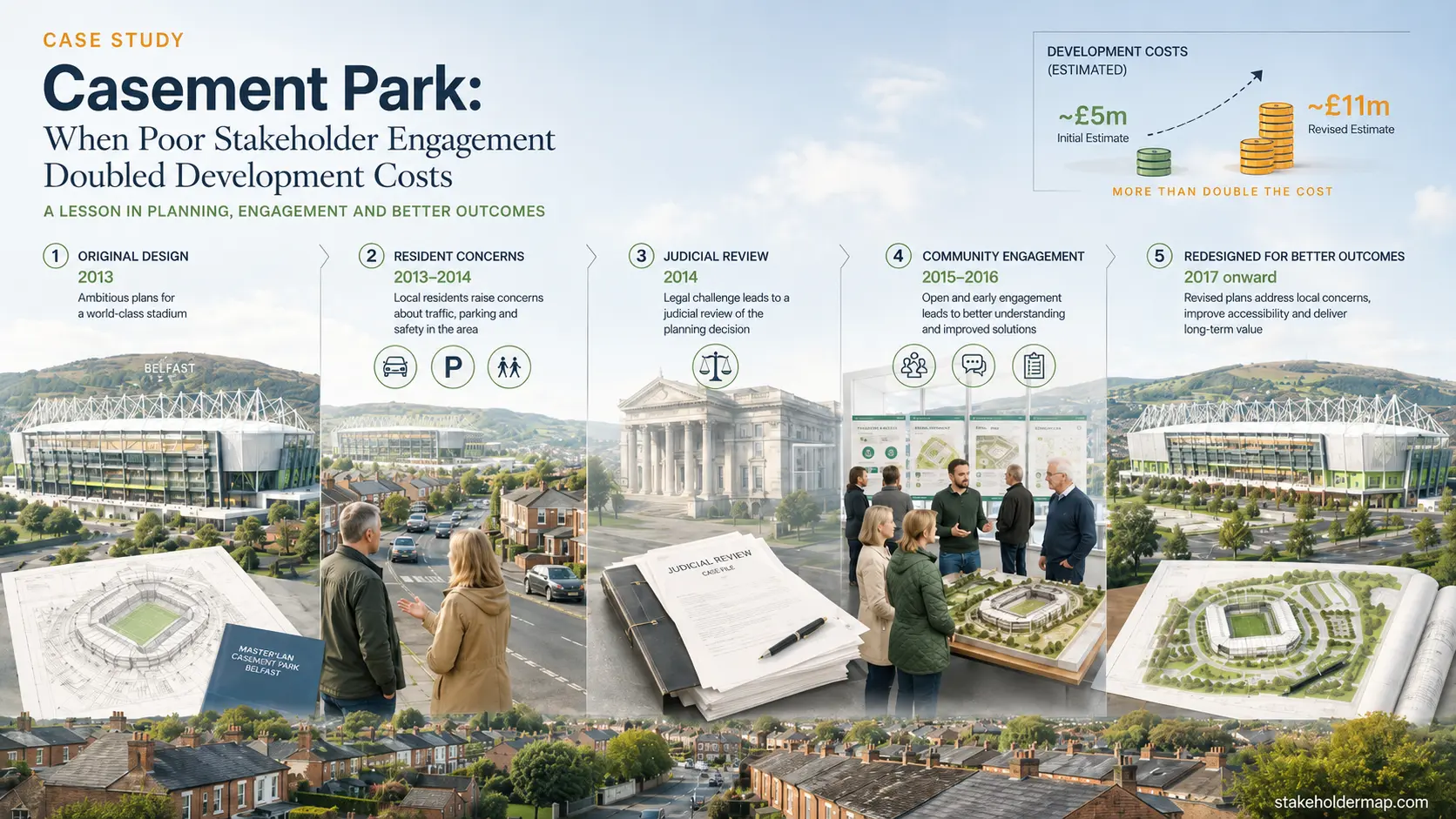
Casement Park: engagement came too late
Local residents raised concerns about traffic, parking and safety. The planning decision was challenged in court and quashed. A 32-week community engagement exercise and a complete redesign followed.
Estimated development costs rose from about £5 million to £11 million.
Heathrow Terminal 5 opened, but key stakeholders were not ready
Terminal 5 opened on 27 March 2008. Staff parking, security checks, baggage systems and operational changes caused major disruption.
The case shows the danger of focusing on the building while overlooking the people and processes needed to run it.
Software could not fix a divided offender management service
The National Offender Management Information System was expected to improve how prisons and probation services shared information.
The project underestimated different working practices, organisational barriers and the needs of frontline users.
NHS medical records programme failed to win enough clinical support
The programme aimed to create a national digital health records system. It relied on a top-down approach and did not involve clinicians enough in important decisions.
Billions of pounds were spent before the programme ended without delivering its main aims.
The £107 million RAF Tornado hangar that was never used
The Ministry of Defence built a large aircraft maintenance hangar that could hold 48 Tornado jets.
Changes to defence plans meant the building was no longer needed for its intended purpose. The case highlights weak links between project decisions and changing operational needs.
Passport delays cost the UK Passport Agency £13 million
The Passport Agency introduced a new computer system while demand was rising. It failed to communicate clearly with applicants, staff and other key groups as delays grew.
The case shows why project teams must plan for stakeholder concerns, service pressure and clear public communication.
Regional fire control centres were built but never used
The project planned to replace local fire control rooms with nine regional centres. Fire and rescue services raised concerns about the design, technology and loss of local knowledge.
The programme failed to gain enough support from the services expected to use it. The completed buildings were left without their intended role.
Lessons from these stakeholder management case studies
Across the seven examples of failure, the same weaknesses appear more than once.
Important stakeholders were identified too late
Residents, frontline staff, clinicians and emergency services had information the project needed. In several cases, the team listened only after serious problems appeared.
Consultation did not shape early decisions
Telling people about a finished plan is not the same as involving them. Good engagement takes place while the project can still change.
Warning signs did not reach decision-makers
Expert advice and stakeholder concerns have little value when they are filtered out, played down or left out of approval papers.
Projects treated people problems as technical problems
New software, buildings and processes cannot fix weak relationships, divided organisations or a lack of trust.
HS2: give people something they can build on
At St Mary's, visitors could ask questions, contribute local knowledge and learn skills they could use elsewhere. The HS2 field museum case study shows why engagement should measure what people gain as well as how many attend. Its success relates to this local programme.
Apply the lessons to your project
Start by listing everyone who can influence your project or will be affected by it. Then assess their power, interests, concerns and likely attitude.