How to use the Ivy Lee method
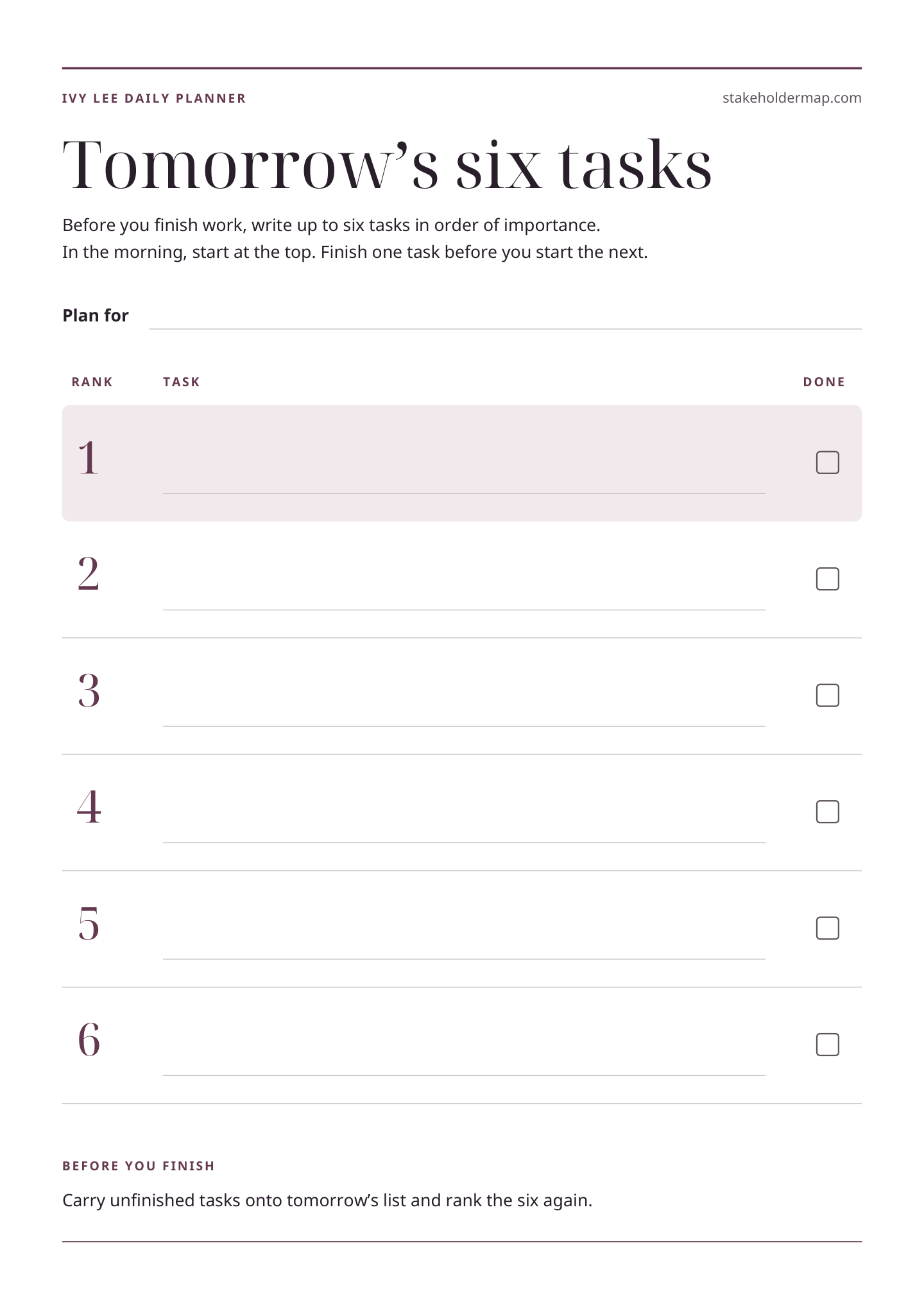
- Before you finish work today, choose tomorrow’s tasks. Give yourself six slots. If only four things matter, leave two blank.
- Put them in order of importance. If you could get only one thing done tomorrow, which would you choose? Put it first.
- In the morning, start with number one. Finish it before you move on to number two. Work down the list one task at a time.
- Make a fresh list at the end of the day. Carry unfinished work forward, add the next day’s priorities and rank them again. An unfinished task takes up one of tomorrow’s six slots.
Six reasons the Ivy Lee method works
1. Your inbox doesn’t get first say
It seems sensible to write a to-do list first thing in the morning. Except there’s a letter on your desk, yesterday’s paperwork is still there and you’ll just check your email. By the time you scribble a list at 10am, guess which jobs spring to mind?
Write it the evening before and you give yourself a bit of breathing space. You still remember the decision you promised the team and why it matters. Leave the list where you’ll see it first. The email can still shout in the morning. You’ve already decided where to start.
2. You can remember the whole method
A productivity tool is hard to stick with if you have to look up the instructions every Monday. Six tasks, in order, one at a time. You could explain it to a colleague on the way to the kettle. Use whatever you already reach for when you need to jot something down, whether that’s a sticky note, your phone or a file on your laptop.
3. You can take it anywhere
Ever bought a lovely productivity journal and then left it on the kitchen table? You can write tomorrow’s six on the back of the meeting agenda. It works on the train home, at a client’s office or wherever you happen to finish the day. A flat phone battery makes no difference.
4. You can use it for the rest of your life
That fancy “live your nicest life” journal might go out of print. The people who make your favourite app might shut it down. You can switch from a notebook to a spreadsheet and back again. The habit you’ve built still works.
5. Six slots make you ruthless
Give me a list of fifteen jobs and I can find three easy ones to tick off while I put off the awkward phone call. Six is short enough to face, and every slot costs you something. Is tidying the shared drive worth leaving out the call that would get Friday’s delivery confirmed?
Putting the call first is a decision you only have to make once. Tomorrow morning, you can pick up the phone before you’ve had a chance to talk yourself into tidying that drive.
6. It’s free, right down to the paper
You don’t even need a pen if you can keep the six tasks in your head. Try a memory palace, sometimes called a Roman room. Picture six familiar spots in the order you pass them. For the office move below, imagine the loading bay form taped to your front door and the IT desk plan spread across the hall mat. Put one vivid reminder at each of the other four spots. In the morning, walk the route in your head.
A project manager’s six tasks for tomorrow
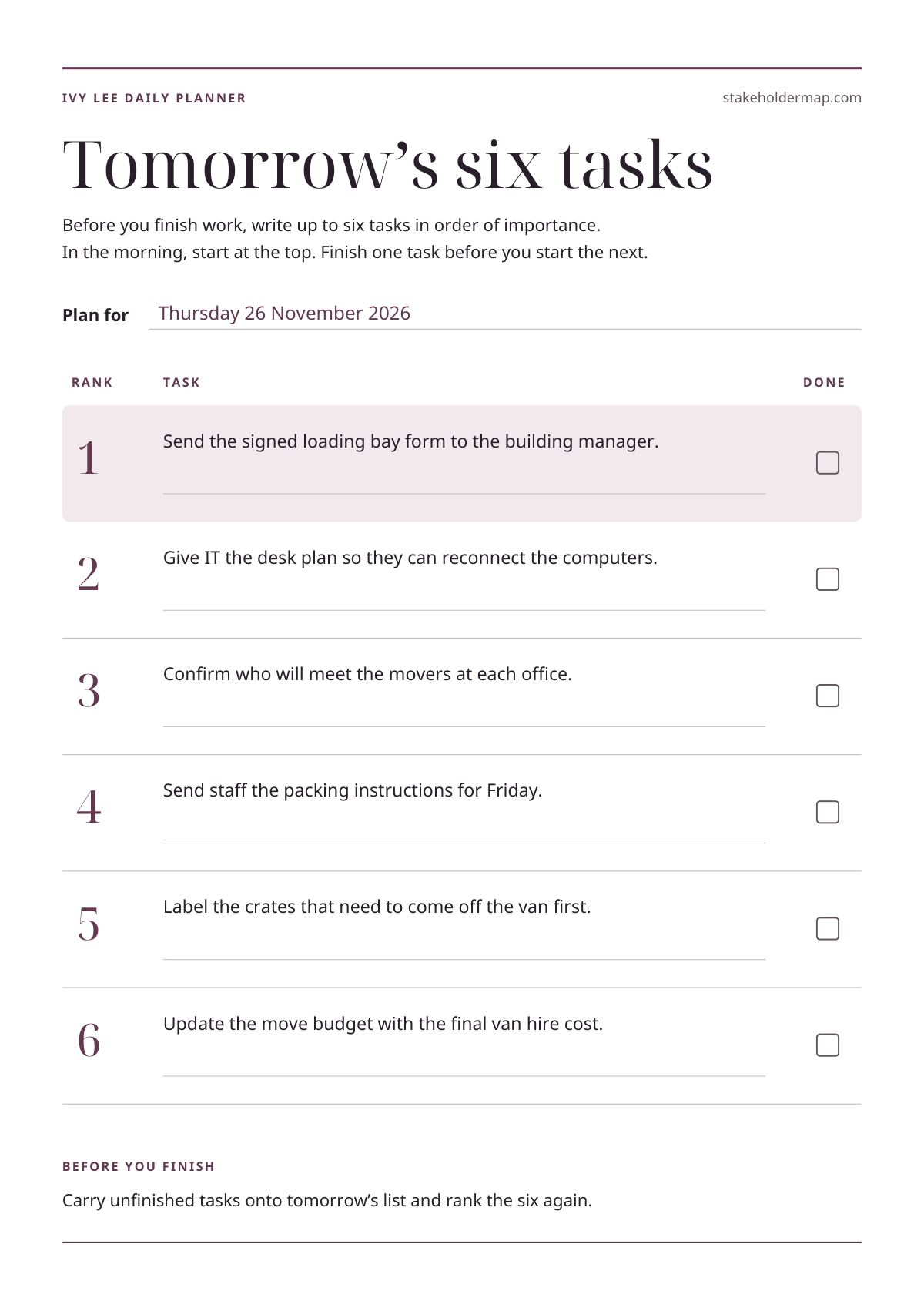
It’s Wednesday afternoon. The office move is on Friday and the building manager can only reserve the loading bay once she has your signed form. Here’s what to leave on your desk for Thursday morning.
- Send the signed loading bay form to the building manager.
- Give IT the desk plan so they can reconnect the computers.
- Confirm who will meet the movers at each office.
- Send staff the packing instructions for Friday.
- Label the crates that need to come off the van first.
- Update the move budget with the final van hire cost.
Why is the form first? The budget can wait an hour. The van needs somewhere to park. Sending the form puts the booking in the building manager’s hands while you get the desk plan to IT.
See the completed planner in PlumChoose a colour and download your planner
Struggling to narrow your list to six? Sort the contenders by urgency and importance with the Eisenhower daily planner.
Read James Clear’s account of the Ivy Lee method for more on the original routine.