Looking for a fresh way to involve people in your project? Browse 60 practical stakeholder engagement ideas, from familiar interviews and newsletters to site tours, prototype sessions and community research.
This list builds on the engagement approaches in our stakeholder engagement guide: pull communications, push communications, consultation, participation and partnership. Use it to find activities for the approach you have chosen.
For the definition, model and plan structure, start with the stakeholder engagement guide. For a closer look at focus groups, questionnaires, interviews, newsletters and websites, see five key ways to engage stakeholders.
Table of Contents:
- Find ideas for your chosen approach
- 60 stakeholder engagement methods
- Keep people informed: 10 ideas
- Listen to needs and concerns: 10 ideas
- Discuss options and consequences: 10 ideas
- Design and test with stakeholders: 10 ideas
- Make the project tangible and useful: 10 ideas
- Sustain relationships and show what changed: 10 ideas
- Example: HS2 and St Mary's Field Museum
- Put your shortlist to use
- Download the original list
- Sources and further reading
Find ideas for your chosen approach
The main guide explains choosing an engagement approach. This table suggests activities from the list below that can put each approach into practice. The way you run an activity determines the role people have: attending a workshop alone does not make someone a partner.
| Approach from the guide | Ideas to explore | Find them below |
|---|---|---|
| Pull communications | Project web pages, site noticeboards and fact sheets available when people need them. | Information ideas, 1 to 10 |
| Push communications | Email updates, printed newsletters and letters sent directly to the people affected. | Information ideas, 1 to 10 |
| Consultation | Interviews, surveys, drop-ins and sessions to discuss options. | Listening ideas, 11 to 20; discussion ideas, 21 to 30 |
| Participation | Prototype testing, pilot projects and community research with defined tasks for participants. | Design ideas, 31 to 40; practical activities, 41 to 50 |
| Partnership | Joint working groups or stakeholder-led monitoring where partners share agreed responsibilities and decisions. | Design ideas, 31 to 40; ongoing activities, 51 to 60 |
Use stakeholder interests, the effects of the project and people's access needs to tailor the activity. People with little formal influence may still have valuable knowledge or be strongly affected by the outcome.
60 stakeholder engagement methods
Browse by what you want people to do: receive information, share concerns, discuss options, help develop the result, explore the work or stay involved. These six browsing groups organise the activities; the five approaches above describe how you engage.
Each entry gives a brief use for the activity. For more guidance on the familiar starting options, read five key engagement techniques.
Keep people informed
- Project web page. Keep dates, decisions, contact details and ways to take part in one place. Assign someone to keep it current.
- Email updates. Send relevant news to each stakeholder group, with a clear next step and a reply address someone monitors.
- Printed newsletters. Reach people who prefer paper or cannot reliably get online. Include a phone number for questions.
- Personal letters. Explain a change directly to the people affected, such as neighbours facing access restrictions.
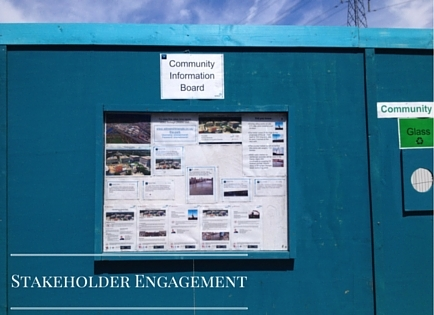
- Site noticeboards. Show what is happening locally, when disruption is expected and who can help. Keep notices readable from the pavement.
- Plain English fact sheets. Explain one issue at a time, such as a new process or a proposed layout. Include the main limitations and uncertainties.
- Visual plans and timelines. Show the sequence of work and the decisions still ahead. Add a written explanation for people who cannot use the graphic.
- Short explanatory videos. Demonstrate a change or explain a proposal. Provide captions and a transcript, plus a route for questions.
- Audio updates or podcasts. Offer interviews or progress reports people can listen to in their own time. Provide a text version too.
- Briefings through existing networks. Use a staff bulletin, residents’ association newsletter or professional network to reach people through a familiar channel.
Listen to needs and concerns
- Individual interviews. Explore someone’s experience in depth. Ask open questions and check that your notes reflect what they meant.
- Small focus groups. Discuss a specific topic with a selected group. Use a facilitator so quieter participants have room to contribute.
- Short surveys. Collect comparable answers from a wider group. Test the questions first and leave space for issues you have missed.
- Quick polls. Check a narrow preference or decide what to discuss next. Do not treat a self-selected poll as proof of everyone’s views.
- Drop-in sessions. Let people speak to the team without sitting through a formal meeting. Offer times that suit different working patterns.
- Telephone appointments. Provide a direct conversation for people who cannot attend or prefer speaking to writing.
- Doorstep conversations. Reach affected households directly where appropriate. Explain who you are, respect refusals and plan staff safety.
- Pop-up listening stands. Meet people at an existing community event or familiar venue. Record concerns as well as the number of conversations.
- Confidential feedback routes. Give people a way to raise sensitive issues privately. Explain who will see their information and how you will respond.
- Observation and shadowing. Watch how work happens, with participants’ agreement. Use what you learn to explore needs that interviews may miss.
Discuss options and consequences
- Public question sessions. Present the choices briefly, then leave substantial time for questions. Publish answers to those you cannot address on the day.
- Small group roundtables. Bring together people with different interests to explore one decision. Record areas of agreement and disagreement.
- Options workshops. Compare realistic alternatives using criteria agreed in advance, such as access, cost or service quality.
- Scenario exercises. Ask what would happen under different conditions. For example, explore how a delayed launch would affect each team.
- Risk workshops. Invite stakeholders to identify possible problems and responses. Record the results in your project risk register.
- Walkthroughs of proposed changes. Take people through a new layout or process step by step and ask where it could cause difficulty.
- Webinars with live questions. Combine a short presentation with moderated questions. Offer another way to contribute for people who cannot join live.
- Moderated discussion forums. Allow people to contribute over several days. Set clear response times and rules for respectful discussion.
- Formal written consultations. Set out a proposal, its likely effects and the questions still open. Explain the deadline and how responses will be considered.
- Facilitated conflict discussions. Use an impartial facilitator when relationships or competing needs block progress. Agree the scope and ground rules first.
Planning a briefing or question session? See five tips on presenting to stakeholders for help preparing and delivering it.
Design and test with stakeholders
- Joint design workshops. Create options with the people who will use or experience the result. Make clear which constraints are fixed.
- Prototype demonstrations. Show an early model people can react to before the design becomes expensive to change.
- Usability testing. Ask intended users to carry out realistic tasks. Observe where they struggle and improve the design.
- Service journey mapping. Map the steps people take through a service and identify handovers, confusion and unnecessary effort.
- Pilot projects. Try a change with a defined group before wider use. Agree the success measures and how problems will be addressed.
- Joint working groups. Give representatives a specific problem to solve together, with an owner, deadline and route to a decision.
- Advisory panels. Invite a balanced group to review proposals over time. Explain how members are chosen and how advice reaches decision makers.
- Shared document reviews. Let stakeholders comment on a draft plan or specification. Resolve comments visibly so contributors know what happened.
- Participatory mapping. Invite people to mark important places, barriers or concerns on a physical or accessible digital map.
- Priority-setting exercises. Ask participants to compare needs and explain trade-offs. State whether the result is advisory or determines a decision.
Make the project tangible and useful
- Guided site tours. Show the work and let people question the team directly. Plan safe access and an alternative for those unable to attend.
- Open days. Offer several activities so visitors can explore the parts of the project that matter to them.
- Temporary exhibitions or field museums. Connect a project with local history or practical learning. Refresh displays as new information emerges.
- Virtual tours. Show places people cannot easily visit. Include a simple written or illustrated version for slower connections.
- Practical skills sessions. Teach a useful skill linked to the project, such as using a new system or recording local heritage.
- School and college activities. Work with educators to create suitable learning activities and opportunities to ask the project team questions.
- Work experience placements. Give participants a structured introduction to project work, with supervision and clear learning goals.
- Community research projects. Invite local people to help investigate an agreed question and explain how findings will be used.
- Memory and story collection. Ask people to contribute experiences of a place or service, with permission for any recording or publication.
- Interactive models and games. Help participants explore a choice or consequence. Follow the activity with discussion so it informs the project.
Sustain relationships and show what changed
- Named stakeholder contacts. Give each group a person who knows their concerns and can follow up across the project team.
- Community liaison groups. Meet representatives regularly to discuss upcoming work and unresolved issues. Keep routes open for people outside the group.
- Staff or user champions. Support trusted colleagues who can explain changes and bring concerns back. Do not make them the only feedback route.
- Regular project reviews. Invite affected groups to review progress at useful decision points rather than only at launch.
- Response and action logs. Track questions, commitments, owners and due dates. Share an appropriate version without exposing private information.
- You said, we did updates. Explain what changed because of feedback and what could not change, with reasons.
- Follow-up feedback checks. Ask participants whether the response addressed their concern. Reopen issues that remain unresolved.
- Stakeholder-led monitoring. Agree measures that participants can help track, such as service access or local disruption, and review findings together.
- Delegated decisions. Let stakeholders decide within an explicitly agreed scope, such as a defined community budget, when the organisation can honour that authority.
- Handover and lessons sessions. Bring users, delivery teams and support staff together to resolve remaining questions and agree who owns future issues.
Example: combine methods, as HS2 did at St Mary's
During archaeological work on the HS2 railway route in Stoke Mandeville, the team created St Mary's Field Museum inside the excavation site. The programme combined open weekends, conversations with archaeologists, practical heritage courses, films, school activities and opportunities to share local memories.
The HS2 community engagement case study reports 1,560 visitors across seven open weekends in 2021, along with further study, work experience and a volunteer heritage project. The article discusses the evidence and its limits. These are results from this local programme, rather than a measure of support for the whole railway.
What could you borrow for your project?
Give people something real to explore, access to someone who can answer questions, and a useful way to contribute.
Software example: let staff try a prototype, discuss their experience with the team and help improve the next version. Then show them which suggestions changed the design.
Put your shortlist to use
Choose a few activities that fit the people you want to reach. Check that you have time to prepare them, make them accessible and respond to what you hear. The Cabinet Office consultation principles offer useful guidance on clear questions, suitable timing and reporting how responses were used.
Add your chosen activities to your plan, with an owner and a date for follow-up. Use the engagement plan contents in the main guide to organise the document, or explore the stakeholder management templates.
Download the original stakeholder engagement list
The original PDF and Excel editions remain available below. They contain the earlier list, including older platform references; the updated methods and explanations are on this page.
Sources and related guides
The five approaches above come from our stakeholder engagement model. The activity descriptions and suggested uses are StakeholderMap.com's practical applications.
- US EPA: public participation tools groups techniques by purpose and links to guidance on individual tools.
- Cabinet Office: Consultation principles, 2018 covers planning consultations and responding to contributions.
- HS2 and St Mary's Field Museum includes the full example and its source accounts.
Explore the related engagement guides
- Stakeholder engagement: definition, model and plan contents
- Five key ways to engage stakeholders: focus groups, questionnaires, interviews, newsletters and websites.
- Five tips on presenting to stakeholders: preparing and delivering your presentation.